
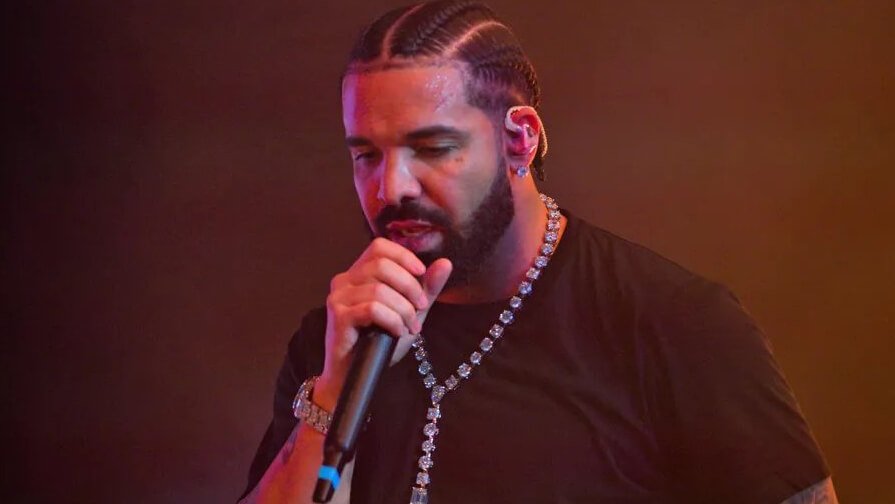
Two separate groups of scholars filed amicus briefs on April 3 in the United States Court of Appeals for the Second Circuit regarding the appeal of Drake’s defamation lawsuit against UMG Recordings, stating that they agreed with the judge siding with the distribution label, citing that the Kendrick Lamar Not Like Us song “constitutes protected opinion rather than actionable defamation,” and that the appeal by the Canadian artist should be denied.
According to Music Business Worldwide, the first brief, submitted by the Floyd Abrams Institute for Freedom of Expression at Yale Law School and Professor Lyrissa Lidsky, was prepared by the Media Freedom & Information Access Clinic, while the second one, was filed on behalf of a group of social scientists and legal scholars, represented by Jack I. Lerner of the UCI Intellectual Property, Arts, and Technology Clinic. Both parties support the appeals court’s dismissal of Drake’s appeal and affirmation of Judge Jeannette Vargas’ October 2025 ruling.
The Floyd Abrams Institute brief says that Drake consented to the back-and-forth response records when he dared Kendrick Lamar to respond to his diss tracks that preceded “Not Like Us.” Because of his actions, the allegedly defamatory statements render his lawsuit null and void under established defamation law. It said, “The challenger consented to the fight, and consent is a classic defense to an intentional tort.”
“Defamation is also an intentional tort, and defamation claims are likewise foreclosed by consent,” the brief states.
The brief says that Drake specifically invited the lyrics he has challenged in court. Citing Drake’s Taylor Made Freestyle, released on April 19, 2024, where, in the rap song, he “specifically encouraged Lamar to ‘talk about him[—i.e., Drake—] likin’ young girls.’”
“It is difficult to imagine a clearer call-and-response,” the brief states.
The second brief says that the threat to free speech is the main reason the appeal cannot be won on behalf of the OVO label owner. Saying rap lyrics and diss track lyrics in particular should not be treated as factual statements.
“Drake’s defamation claim rests on the assumption that every word of ‘Not Like Us’ should be taken literally, as a factual representation,” the brief says. “This assumption is not just faulty — it is dangerous.”
It also raises the question of whether Drake is against the very same reasoning he is using to support the merits of the lawsuit. They cited Drake’s participation in the “Protect Black Art” campaign, which states that rap lyrics should not be used against artists as evidence in court cases.
“Though Drake has previously acknowledged this danger publicly, he now paradoxically and problematically embraces it,” the brief reads.
Drake initially filed the defamation lawsuit against UMG in January 2025, which was dismissed in October 2025. The recording artist appealed the judge’s ruling in January 2026.
2 Legal Groups Of Scholars Side With Judge’s Ruling In Drake’s Defamation Lawsuit Appeal